
Pest library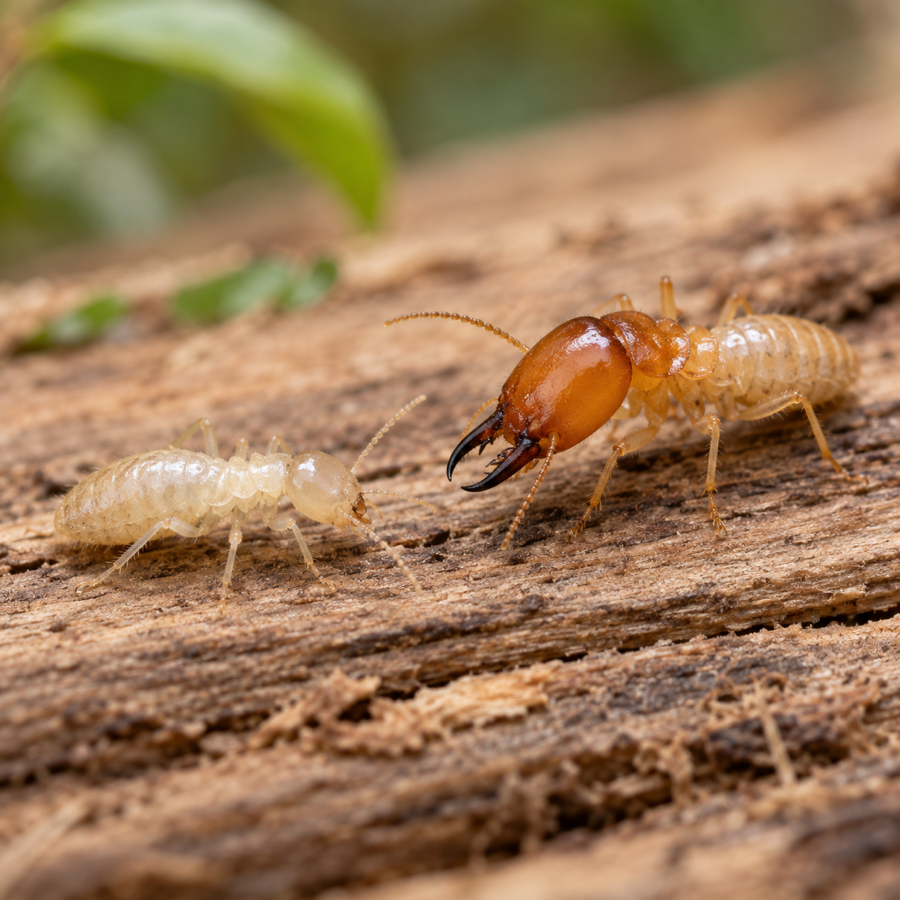
Wood-destroying insect
Termites
Odontotermes spp. / Coptotermes spp.
Social insects that recycle cellulose in nature but can cause serious concealed damage when colonies reach buildings and timber.
Included in this category
Drywood Termites
Dampwood Termites
Higher Termites (Termitidae)
Formosan termites (Coptotermes formosanus)
Coptotermes spp.
Microcerotermes spp
Kalotermes jepsoni
Macrotermes spp
Heterotermes indicola
Nasutitermes spp
Glyptotermes chiraharitae
Psammotermes rajathanicus
Reticulitermes flavipes (Eastern Subterranean)
01
Appearance
Workers are soft-bodied and pale; soldiers usually have darker, enlarged heads. Winged reproductives have two pairs of similarly sized wings and emerge during seasonal swarms.
02
Behavior
Subterranean colonies forage through soil and build mud tubes to maintain humidity while reaching wood. Activity often remains hidden behind finishes or below floors.
03
Diet & habits
Cellulose from wood, paper, cardboard and plant material, digested with the help of gut microorganisms. They may travel through non-food materials to reach a food source.
04
Reproduction
A mature colony contains a queen, king, workers and soldiers. Winged alates disperse after rain or during humid periods, shed their wings and may establish new colonies.
05
Signs of an infestation
Mud shelter tubes, hollow-sounding wood, blistered paint, damaged timber, discarded wings, swarmers and fine soil deposits around joints or cracks.
06
Health & property significance
Termites are not generally a direct human-health threat, but their hidden feeding can weaken joinery, furniture, records and structural timber, leading to costly repairs.
Prevention
Reduce the conditions that help pests thrive.
Avoid wood-to-soil contact
Correct drainage and persistent dampness
Inspect foundations and service entries
Plan pre- and post-construction protection
Professional support
Seeing signs of termites activity?
Arrange a site-specific assessment with PCAMB.