
Pest library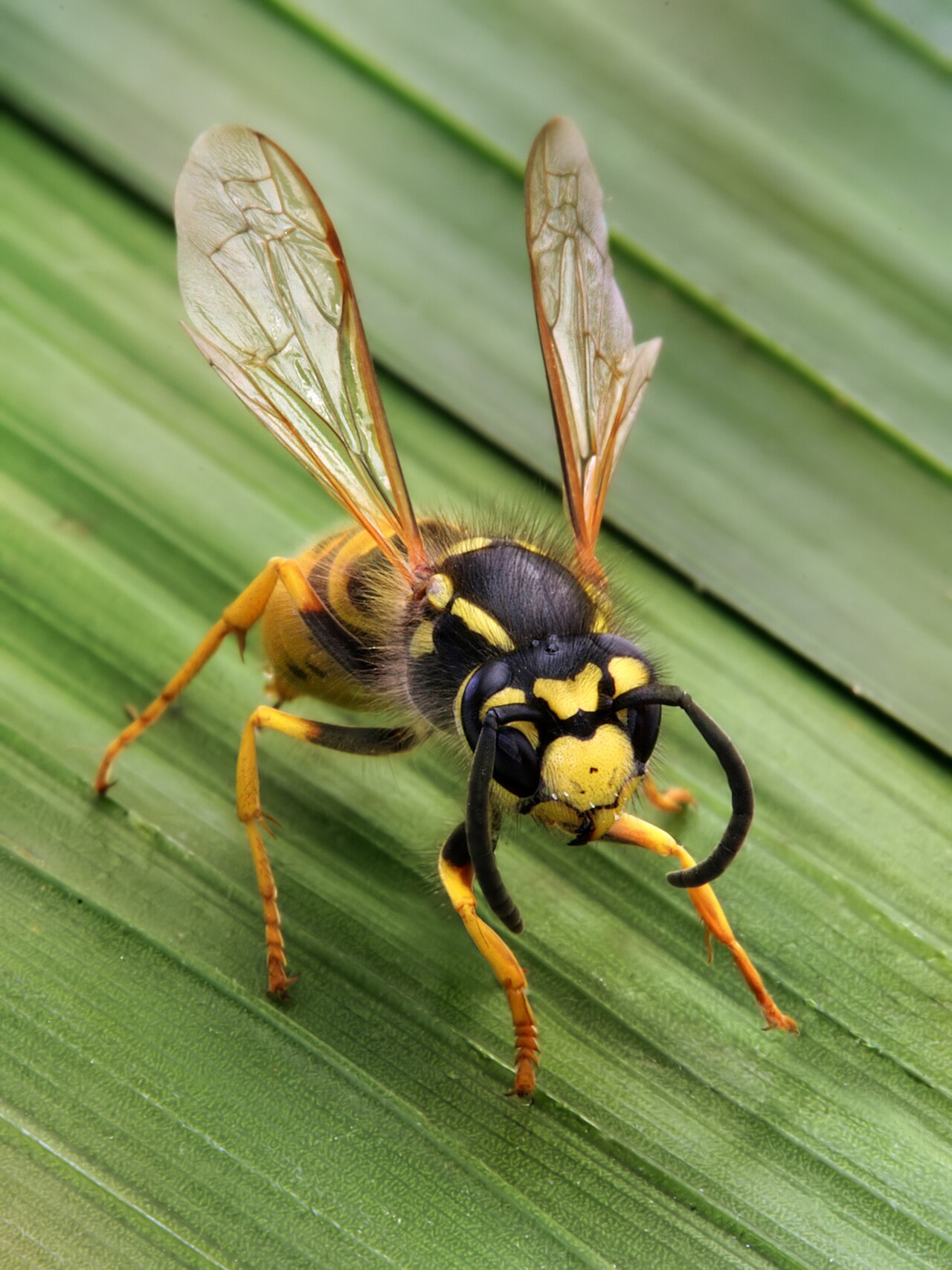
Stinging animals
Stinging Pests
Wasps, hornets and scorpions
Wasps, hornets and scorpions that can defend themselves or their nests with a painful sting.
Included in this category
Wasps
Hornets
Photo: Richard Bartz · Source · CC BY-SA 2.5
01
Appearance
Wasps and hornets have narrow waists and folded wings; scorpions have pincers and a segmented tail ending in a stinger.
02
Behavior
Social wasps defend nests, while many scorpions hide by day and hunt at night in sheltered spaces.
03
Diet & habits
Wasps take sugary foods and prey; hornets hunt insects; scorpions feed on insects and other small animals.
04
Reproduction
Social wasps build seasonal colonies. Scorpions give birth to live young that initially ride on the mother.
05
Signs of an infestation
Repeated flight to a nest opening, visible nests, stinging incidents, or scorpions beneath objects and in cracks.
06
Health & property significance
Stings can be medically serious, especially for allergic individuals. Do not disturb active nests or handle scorpions.
Prevention
Reduce the conditions that help pests thrive.
Confirm the organism before selecting control measures
Remove food, water and shelter where practical
Seal or manage access points and harbourage
Use monitoring and a site-specific IPM programme
Professional support
Seeing signs of stinging pests activity?
Arrange a site-specific assessment with PCAMB.