
Pest library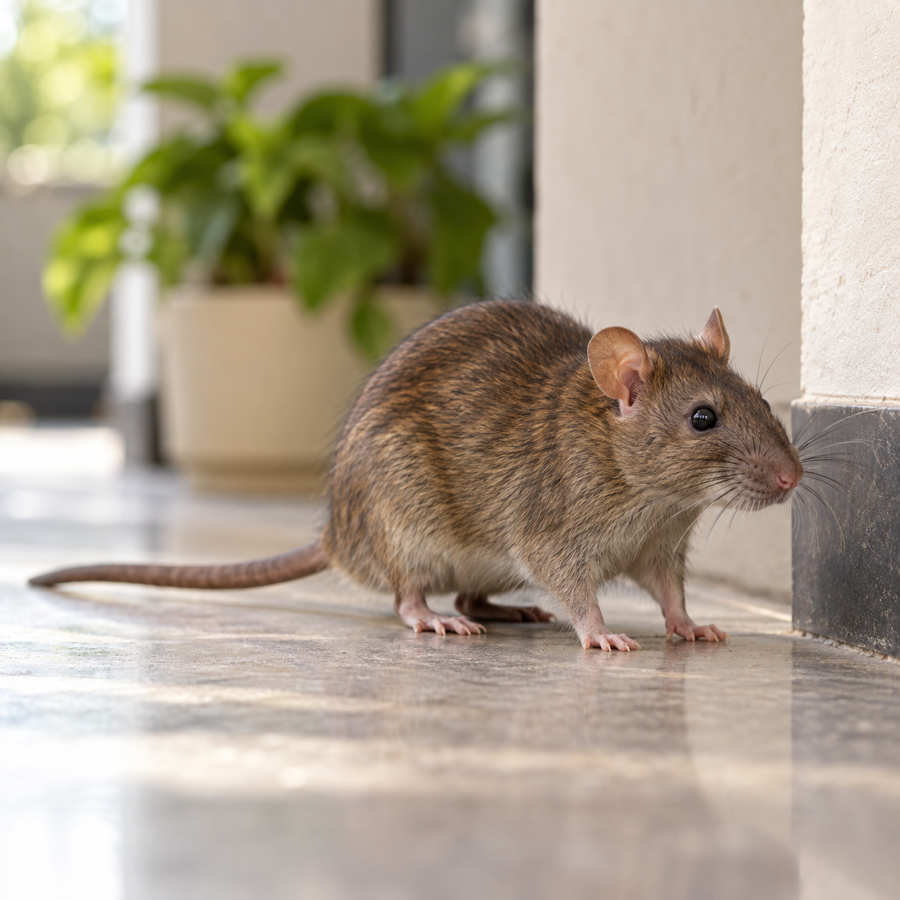
Rodent
Rodents (Rats)
Rattus rattus / Rattus norvegicus
Intelligent, adaptable rodents that exploit food, water and shelter in homes, markets, sewers, warehouses and transport networks.
Included in this category
Brown Rat / Norway Rat (Rattus norvegicus)
House Mouse (Mus musculus)
Bandicoot Rats (Bandicota bengalensis)
Indian Field Mouse (Mus booduga)
Asian house shrew (Suncus murinus)
01
Appearance
The roof rat is slender with large ears and a tail usually longer than its body; the Norway rat is heavier, with smaller ears and a relatively shorter tail.
02
Behavior
Mostly nocturnal, cautious and capable climbers or burrowers depending on species. They use regular runways, communicate through scent and may range between buildings and outdoor harbourage.
03
Diet & habits
Omnivorous feeders that consume grains, fruit, waste, animal feed and many stored products. They gnaw regularly to manage continuously growing incisors.
04
Reproduction
Rats mature quickly and can produce several litters each year when resources are plentiful. Population growth can therefore be rapid in undisturbed harbourage.
05
Signs of an infestation
Droppings, gnaw marks, rub marks, tracks, scratching noises, burrows, nesting material, damaged packaging and sightings—especially during daylight when pressure is high.
06
Health & property significance
Rodents can contaminate food, damage wiring and structures, carry ectoparasites and contribute to the transmission of diseases including leptospirosis and salmonellosis.
Prevention
Reduce the conditions that help pests thrive.
Seal openings larger than about 12 mm
Store food and waste in robust containers
Remove vegetation and clutter near buildings
Use monitored, professionally managed controls
Professional support
Seeing signs of rodents (rats) activity?
Arrange a site-specific assessment with PCAMB.