
Pest library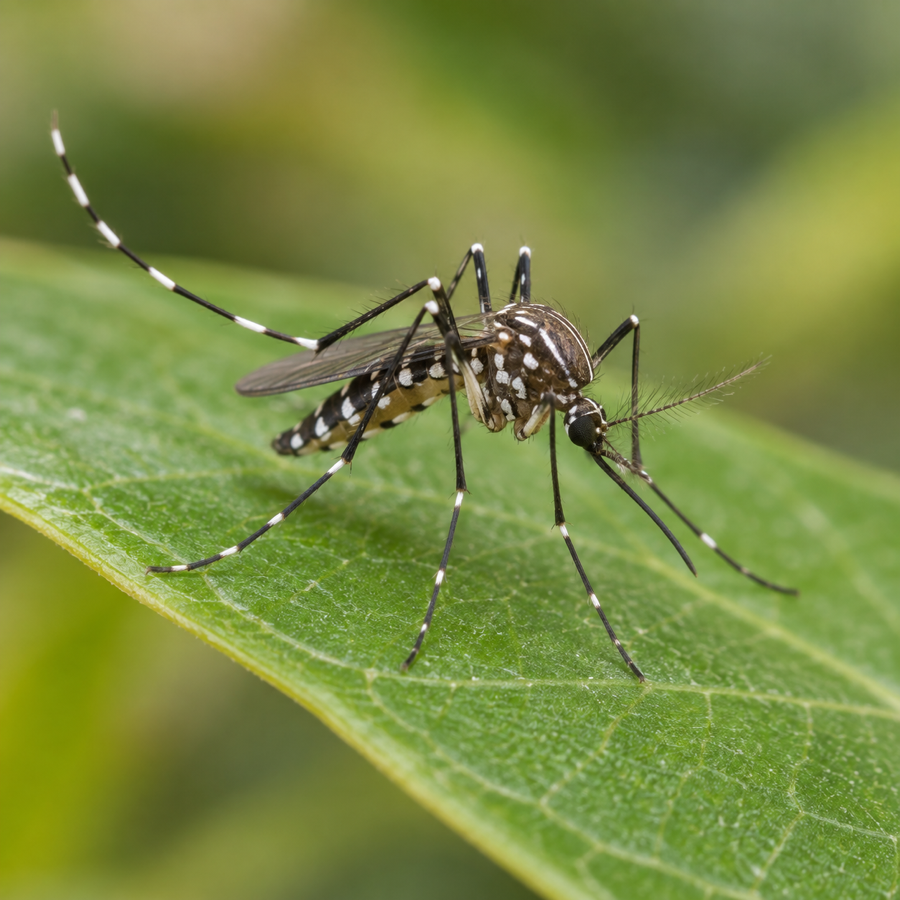
Flying insect
Mosquitoes
Aedes aegypti / Anopheles spp. / Culex spp.
Small flying insects whose females may bite; different genera can transmit important diseases in India and around the world.
Included in this category
Anopheles mosquito (Anopheles SPP.)
Culex mosquito (Culex spp.)
01
Appearance
Slender insects with long legs, a narrow body and a projecting proboscis. Aedes aegypti has conspicuous white markings; other common genera differ in colour, posture and wing pattern.
02
Behavior
Activity varies by species: Aedes often bite by day, Anopheles commonly from dusk to dawn, and Culex mainly at night. Adults rest in sheltered, humid locations.
03
Diet & habits
Adults feed on plant nectar for energy. Females of many species also take blood meals to develop eggs, while males do not bite.
04
Reproduction
Eggs are laid on or close to water. Larvae and pupae develop in water before emerging as adults; small containers can produce adults in about a week under warm conditions.
05
Signs of an infestation
Repeated biting, whining adults, larvae wriggling in standing water and concentrations of adults in shaded rooms, vegetation, drains or near breeding containers.
06
Health & property significance
Depending on species and location, mosquitoes can transmit dengue, malaria, chikungunya, Japanese encephalitis, West Nile virus and other infections. Local public-health guidance is essential.
Prevention
Reduce the conditions that help pests thrive.
Empty or cover standing water weekly
Maintain screens, drains and tanks
Wear suitable clothing and approved repellent
Coordinate community-wide source reduction
Professional support
Seeing signs of mosquitoes activity?
Arrange a site-specific assessment with PCAMB.