
Pest library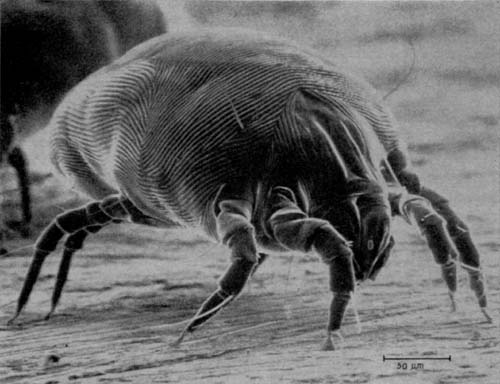
Microscopic arachnids
Mites
Acari
A highly diverse group including dust, itch, storage, bird and plant-feeding mites.
Included in this category
Itch Mite (Sarcoptes scabiei)
Storage Mites
Poultry / Bird Mites
Structure Spider Mites (Tetranychus urticae)
Red spider mites (Tetranychidae)
Photo: US Government · Source · Public domain
01
Appearance
Most are extremely small, with rounded bodies and eight legs as nymphs and adults. Microscopy may be needed for identification.
02
Behavior
Habits depend on species: some live in dust, food or nests, some parasitise hosts, and others feed on plants.
03
Diet & habits
Skin scales, mould, stored foods, plant fluids or animal tissue, depending on the mite.
04
Reproduction
Mites develop through egg, larval, nymphal and adult stages, often rapidly in warm humid conditions.
05
Signs of an infestation
Itching, fine contamination in food, plant stippling, mites near bird nests or allergy symptoms linked to indoor dust.
06
Health & property significance
Some cause dermatitis, allergies or product contamination; others damage plants or parasitise animals.
Prevention
Reduce the conditions that help pests thrive.
Confirm the organism before selecting control measures
Remove food, water and shelter where practical
Seal or manage access points and harbourage
Use monitoring and a site-specific IPM programme
Professional support
Seeing signs of mites activity?
Arrange a site-specific assessment with PCAMB.