
Pest library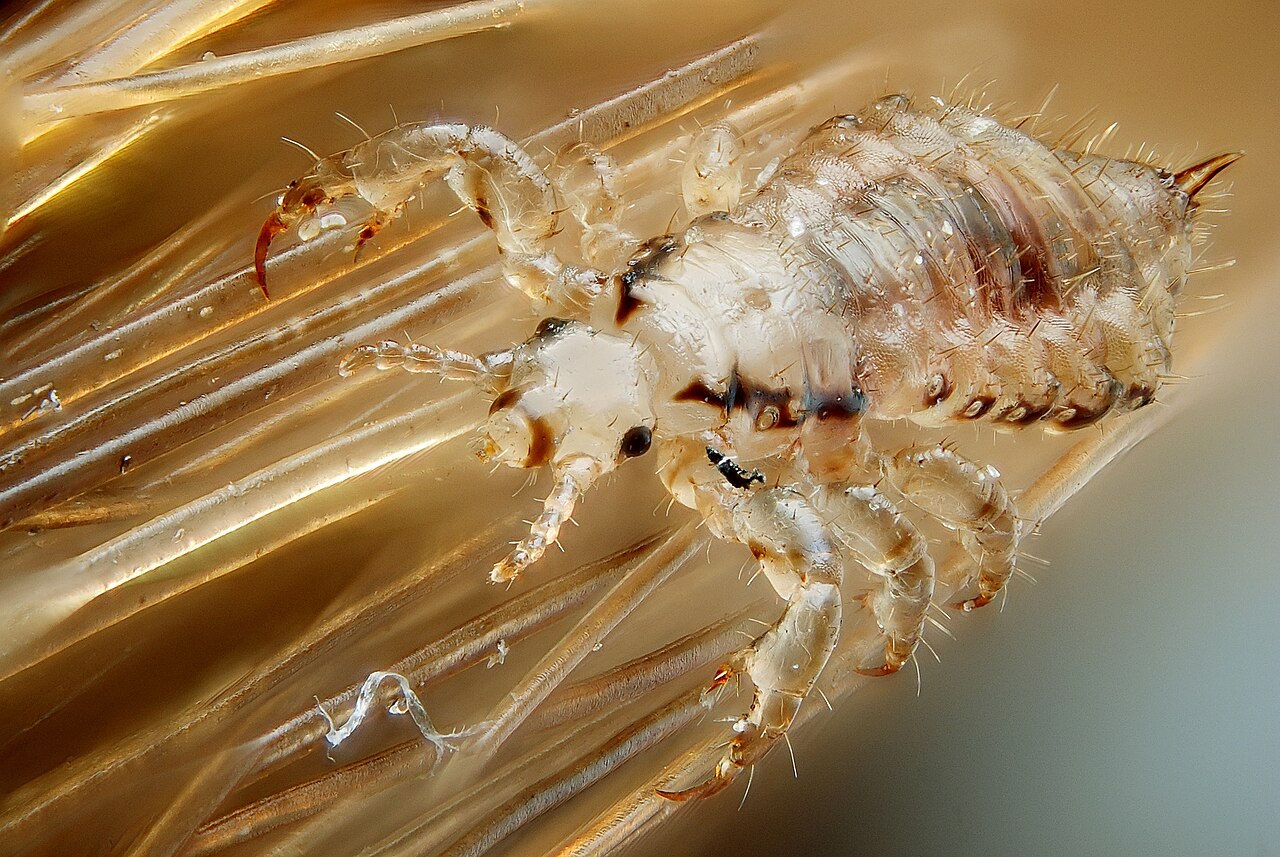
Parasitic and nuisance organisms
Lice
Phthiraptera and related terrestrial isopods
The library includes human head lice and woodlice, two unrelated groups that require very different responses.
Included in this category
Head lice / Head Louse
Photo: Gilles San Martin · Source · CC BY-SA 2.0
01
Appearance
Head lice are tiny flattened insects that cling to hair. Woodlice are segmented crustaceans with multiple pairs of legs.
02
Behavior
Head lice remain close to the scalp and spread through close contact. Woodlice shelter in cool, damp places and may wander indoors.
03
Diet & habits
Head lice feed on blood; woodlice feed on decaying plant material and microorganisms.
04
Reproduction
Head lice cement eggs to hair shafts. Woodlice brood their young and reproduce in moist outdoor harbourage.
05
Signs of an infestation
Head lice or nits in hair, or woodlice beneath pots, debris, damp thresholds and floor edges.
06
Health & property significance
Head lice cause itching and require personal treatment guidance. Woodlice are harmless indicators of excess moisture.
Prevention
Reduce the conditions that help pests thrive.
Confirm the organism before selecting control measures
Remove food, water and shelter where practical
Seal or manage access points and harbourage
Use monitoring and a site-specific IPM programme
Professional support
Seeing signs of lice activity?
Arrange a site-specific assessment with PCAMB.