
Pest library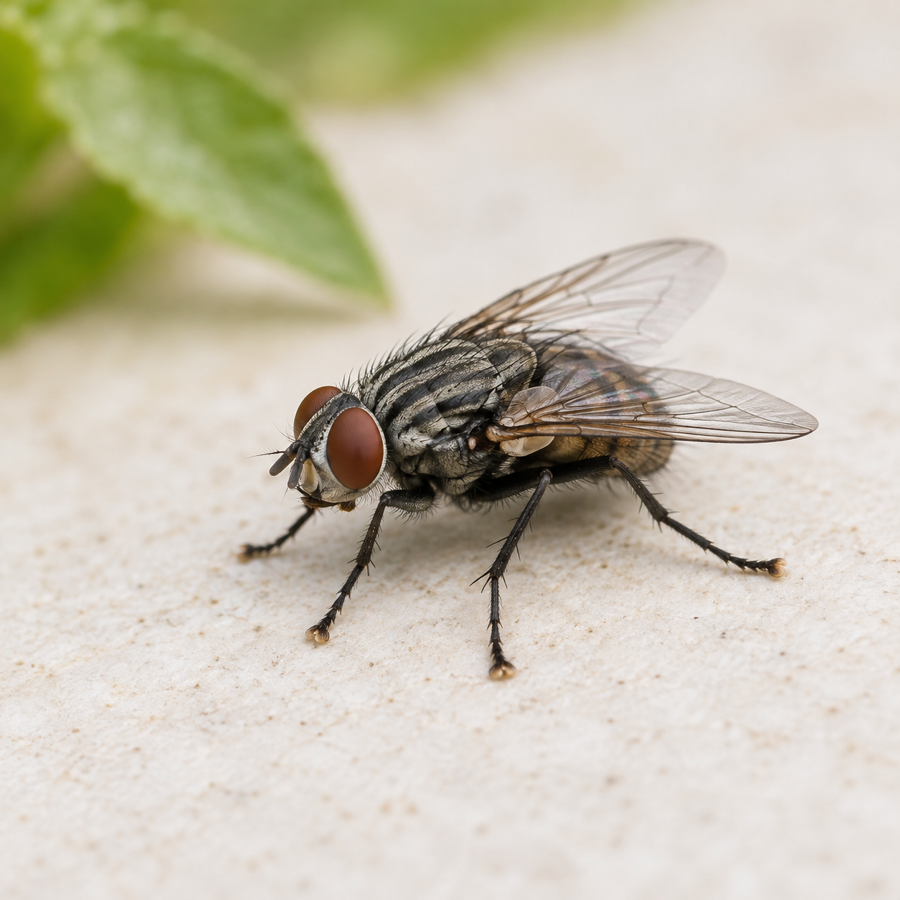
Flying insect
Flies
Musca domestica
A widespread fly strongly associated with people, food handling and decomposing organic material in urban and agricultural settings.
Included in this category
Fruit fly (Drosophila species)
Drain fly (Psychodidae)
Flesh fly (Family - Sarcophagidae)
Blow Fly / Bluebottle fly (Calliphora vomitoria)
01
Appearance
Adults are usually 6–8 mm long, grey, with four dark stripes on the thorax and large reddish compound eyes. They have one functional pair of wings.
02
Behavior
Active mainly by day, houseflies repeatedly move between food, waste and resting surfaces. They taste with their feet and feed using sponging mouthparts.
03
Diet & habits
Liquids and soluble material from food, waste, manure and decaying organic matter. Solid food is liquefied with saliva before being consumed.
04
Reproduction
Females lay batches of eggs in moist decomposing matter. Cream-coloured larvae develop through three stages, then pupate in a drier nearby location.
05
Signs of an infestation
Frequent adults around doors, windows, lights or food; dark spotting on surfaces; larvae in waste; and persistent activity around a breeding source.
06
Health & property significance
Houseflies can mechanically transfer microorganisms from contaminated material to food and food-contact surfaces, making exclusion and sanitation especially important in food facilities.
Prevention
Reduce the conditions that help pests thrive.
Keep bins closed and clean
Remove organic waste frequently
Fit and maintain screens and air curtains
Locate and eliminate breeding material
Professional support
Seeing signs of flies activity?
Arrange a site-specific assessment with PCAMB.