
Pest library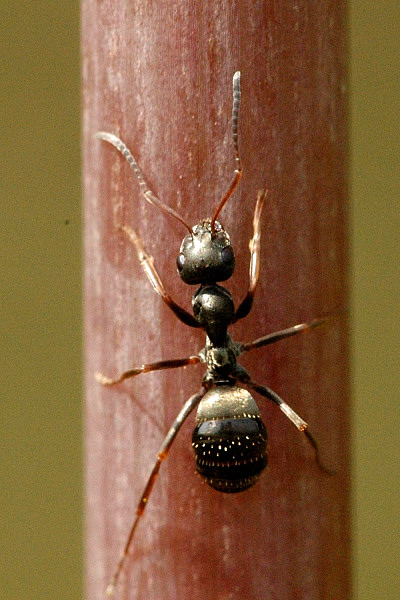
Crawling insects
Common Ants
Formicidae
Social insects that form organised colonies and may forage indoors for food and water.
Included in this category
Red Ant / Fire ant (Solenopsis spp)
Photo: James K. Lindsey · Source · CC BY-SA 3.0
01
Appearance
Small, narrow-waisted insects with elbowed antennae. Colour and size vary by species, from tiny dark ants to larger reddish workers.
02
Behavior
Workers follow scent trails between the nest and food. Colonies may occupy soil, wall voids, paving gaps or damp structural areas.
03
Diet & habits
Sugars, proteins, oils, dead insects and household food residues. Preferences can change with the needs of the colony.
04
Reproduction
Queens establish colonies and produce workers; winged males and females may emerge seasonally to mate and disperse.
05
Signs of an infestation
Regular ant trails, soil around nest openings, activity near food or water, and winged ants emerging from a concealed nest.
06
Health & property significance
Most common ants are mainly a nuisance, but they can contaminate food and some species sting, bite or damage materials.
Prevention
Reduce the conditions that help pests thrive.
Confirm the organism before selecting control measures
Remove food, water and shelter where practical
Seal or manage access points and harbourage
Use monitoring and a site-specific IPM programme
Professional support
Seeing signs of common ants activity?
Arrange a site-specific assessment with PCAMB.