
Pest library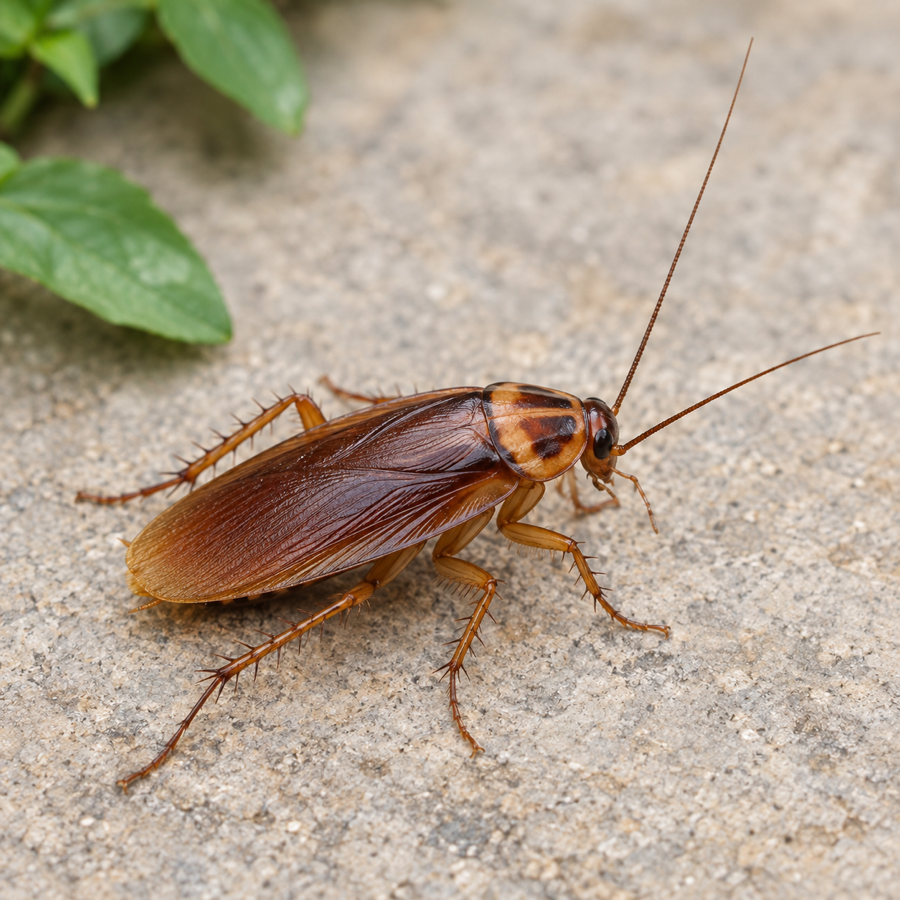
Crawling insect
Cockroaches
Periplaneta americana / Blattella germanica
Highly adaptable, mostly nocturnal insects that thrive near food, water and warmth in homes and commercial facilities.
Included in this category
American Cockroach (Periplaneta americana)
Oriental Cockroach (Blatta orientalis)
Brown-Banded Cockroach (Supella longipalpa)
01
Appearance
Flattened, oval-bodied insects with long antennae and spiny legs. Adults range from about 10–40 mm depending on species and may be light brown to reddish brown.
02
Behavior
They hide in cracks, drains, equipment voids and other dark harbourages during the day, emerging at night. Aggregations can grow rapidly where moisture and food are continuously available.
03
Diet & habits
Opportunistic omnivores that eat food residues, grease, starch, paper, glue and decaying organic matter. Even small crumbs and spills can support activity.
04
Reproduction
Females produce egg cases called oothecae. German cockroaches carry the case until close to hatching, while other species deposit it in a protected place.
05
Signs of an infestation
Live or dead insects, pepper-like droppings, shed skins, egg cases, a persistent musty odour and smear marks along frequently used routes.
06
Health & property significance
Cockroaches can mechanically contaminate food and surfaces with microorganisms and their body fragments can contribute to allergic reactions and asthma in sensitive people.
Prevention
Reduce the conditions that help pests thrive.
Seal gaps around pipes and cabinets
Keep food covered and clean spills promptly
Repair leaks and dry wet areas
Use monitoring and professional IPM
Professional support
Seeing signs of cockroaches activity?
Arrange a site-specific assessment with PCAMB.