
01
Appearance
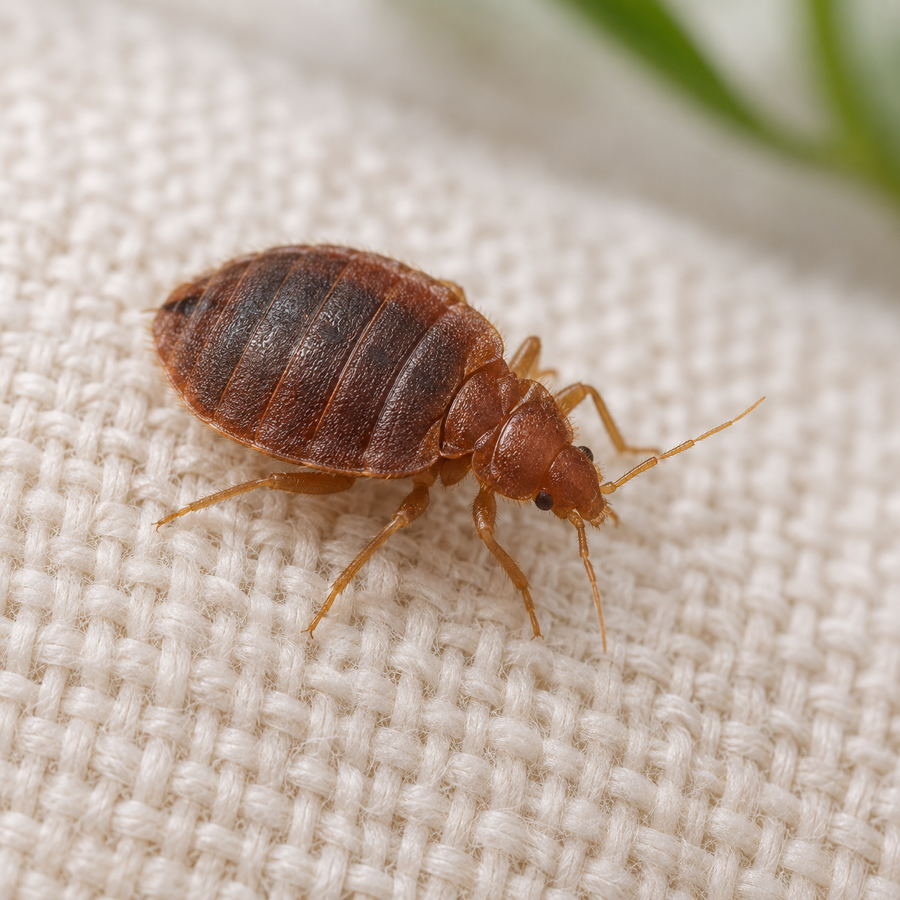
Adults are oval, wingless and reddish brown, usually 4–7 mm long. Nymphs are smaller and paler; recently fed bugs become darker and more elongated.
Biting insect
Cimex lectularius / Cimex hemipterus
Flat, nocturnal insects that feed on blood and spread mainly by hitchhiking in luggage, furniture and personal belongings.
01
Adults are oval, wingless and reddish brown, usually 4–7 mm long. Nymphs are smaller and paler; recently fed bugs become darker and more elongated.
02
They shelter close to resting hosts in mattress seams, bed frames, furniture, skirting and cracks. They are not associated with poor hygiene and can occur in any well-used sleeping space.
03
Bed bugs feed only on blood, primarily from people but sometimes from other warm-blooded hosts. They can survive for extended periods without feeding.
04
Females lay small pearly eggs in protected harbourages. Development passes through five nymphal stages, each generally requiring a blood meal before moulting.
05
Live bugs, pale eggs, shed skins, dark faecal spots, small blood marks on bedding and clustered itchy bites—although skin reactions alone do not confirm an infestation.
06
They are not known to be efficient disease vectors, but bites may cause irritation, secondary infection and substantial sleep loss, stress and social stigma.
Prevention
Professional support
Arrange a site-specific assessment with PCAMB.